 SalesCandy Archive
Engineering
SalesCandy’s v3 serverless rebuild
Three architecture diagrams from AWS Activate 2021 show how SalesCandy moved from a shared server stack to separate managed services.
v1 · An outsourced MVP, 2017
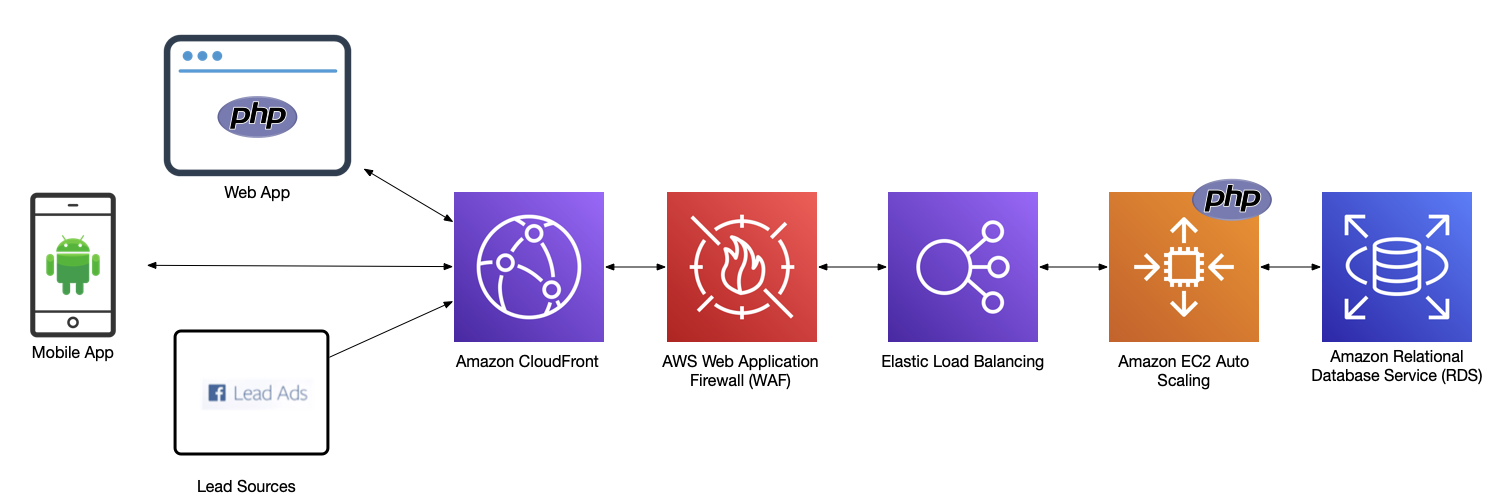
The first diagram shows the web app, mobile app, and lead sources passing through a shared path to the application servers and a single RDS database. SalesCandy outsourced development of this first version.
v2 · A more complex stack, 2018
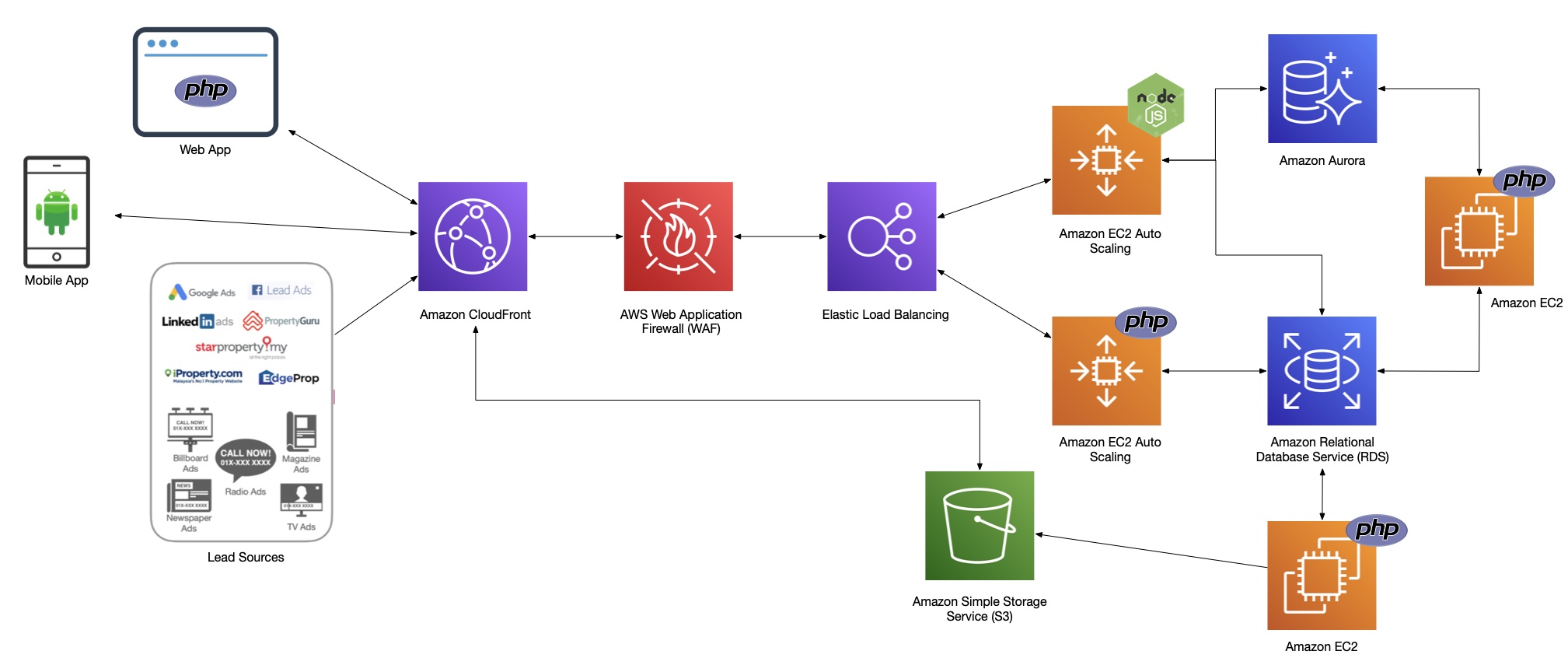
As SalesCandy added features and brought engineering in-house, its stack acquired separate compute and database components and a static storage path. Rosli identified uneven load as one of the scaling problems the team faced.
v3 · Managed services with distinct jobs, from 2019
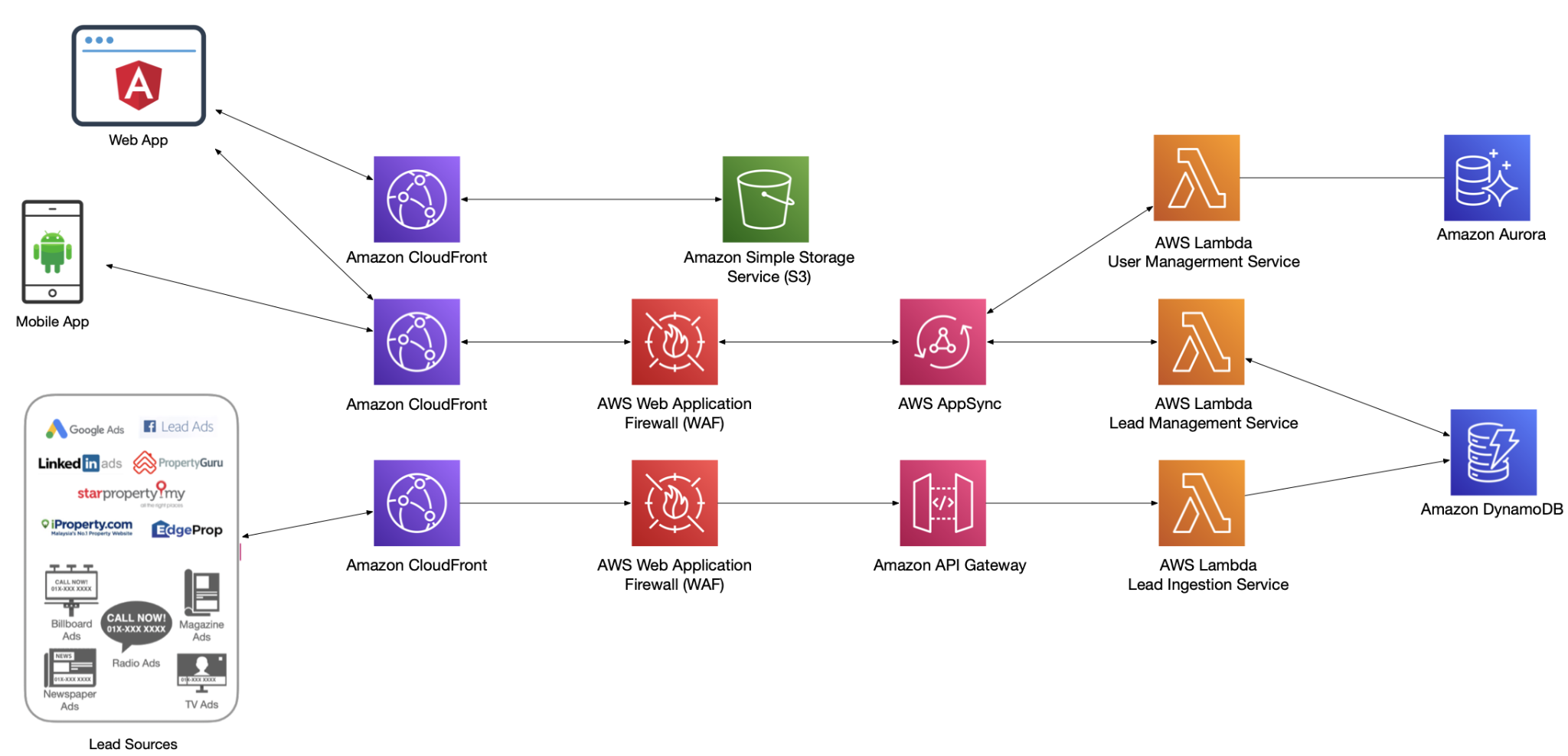
CloudFront served the Angular app from S3. The web and Android apps used a shared GraphQL API through AWS AppSync to reach Lambda services for user and lead management. External lead sources entered through a separate API Gateway and Lambda path. Aurora and DynamoDB served different parts of the application. That gave the team distinct places to change or scale the web app, the client API, and lead intake.
Source. SalesCandy’s archived AWS Activate presentation, revised deck dated 22 June 2021, slides 8–12 and 17–18. Architectural review