 SalesCandy Archive
Retrospectives for All
What happens when you take a meeting designed to improve the next software sprint and ask the whole company to use the same habit?
The retrospective diaries
I found communication gaps and unclear requirements underneath a drawing of an anchor. Above the water, the team had put tools, tests, and coordination in the wind. I’d been reading commit messages about fixes. Here was a record of people trying to name what helped them work together and what got in their way.
Reza recalls that the team posted these retrospective diaries in JANDI, where colleagues across SalesCandy read them. I’ve kept the boards together here so you can see the language, drawings, and sticky notes the team used to tell its own story.
-
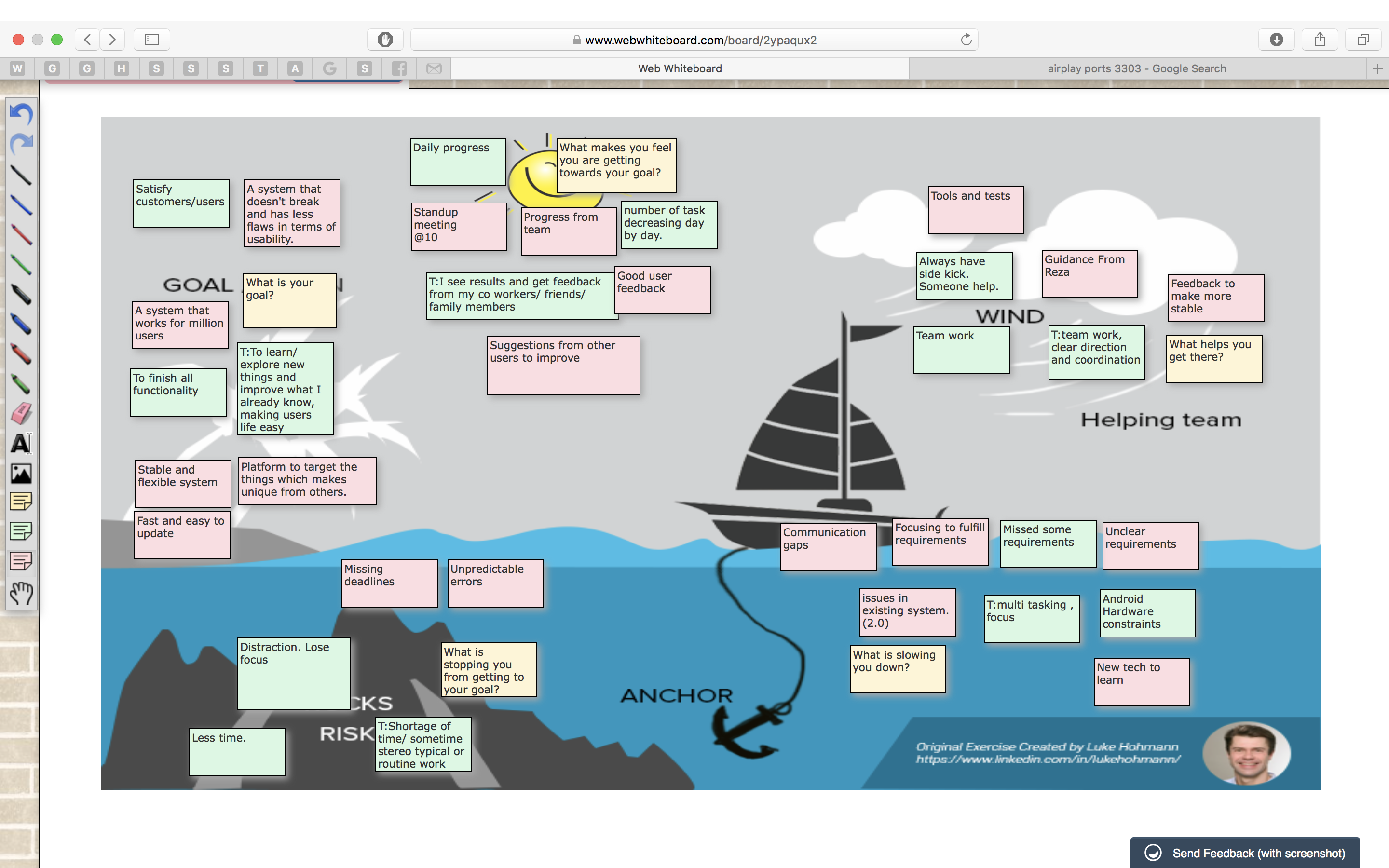
Sailboat retrospective
The team used a sailboat to map its goal, what helped it move, what slowed it down, and the risks ahead.
-
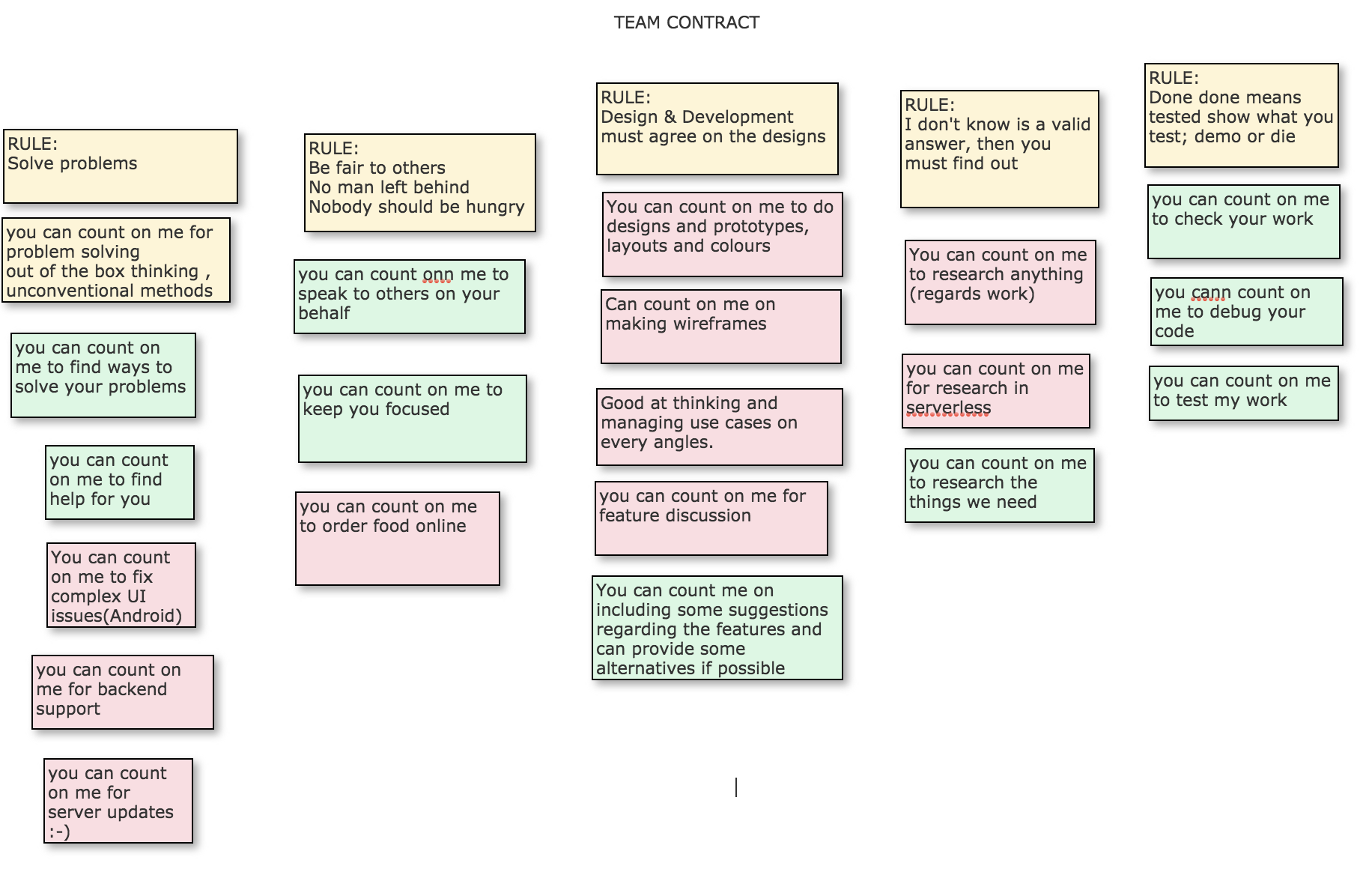
High-performing team and Team Contract
The team turned a discussion about high performance into a working agreement.
-
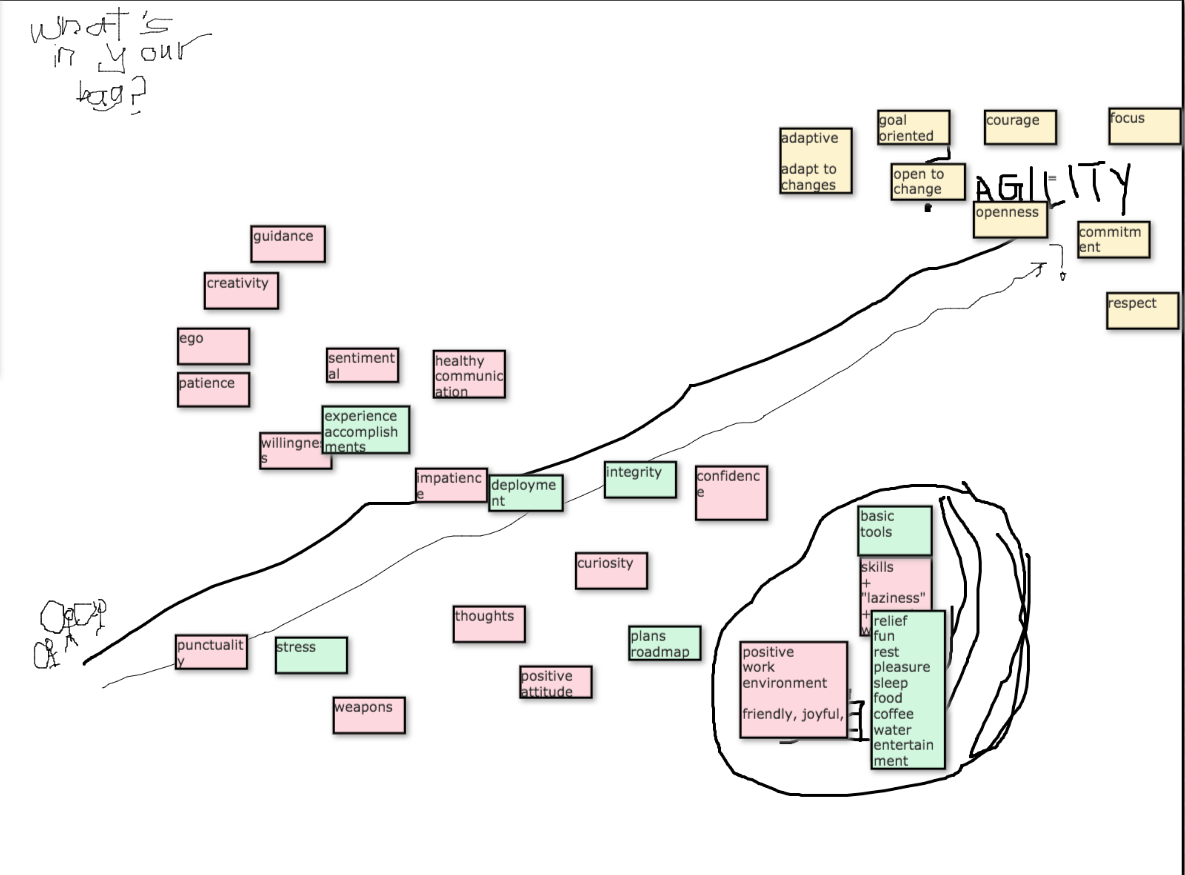
What’s in your bag?
A hand-drawn journey toward agility invited the team to name what they carried along the way.
-
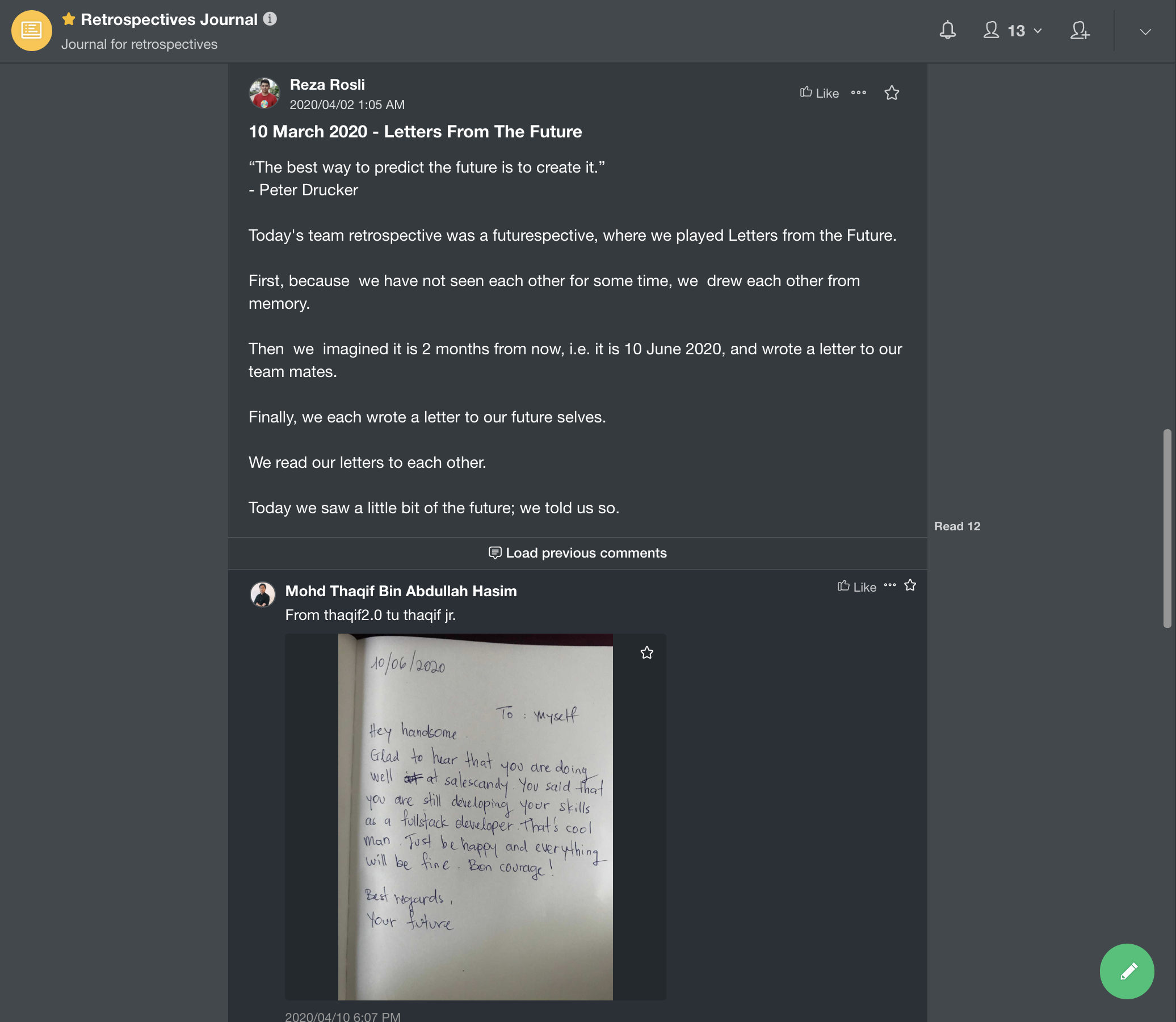
JANDI journal post · 2 April 2020 Letters from the Future
As the pandemic separated the team, they drew one another from memory and wrote letters from an imagined June 2020.
-
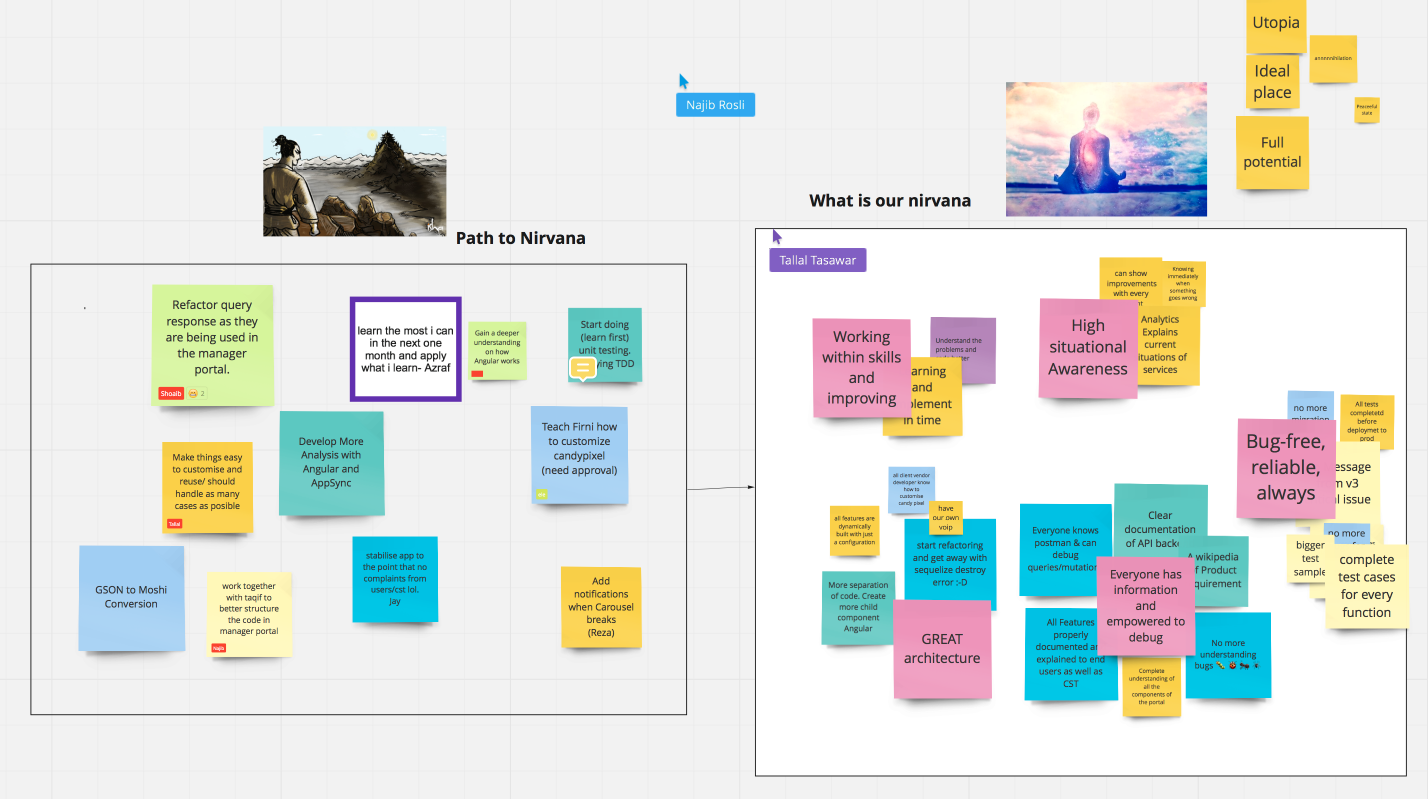
Path to Nirvana
The team pictured an ideal way of working and placed concrete steps beside it.
-
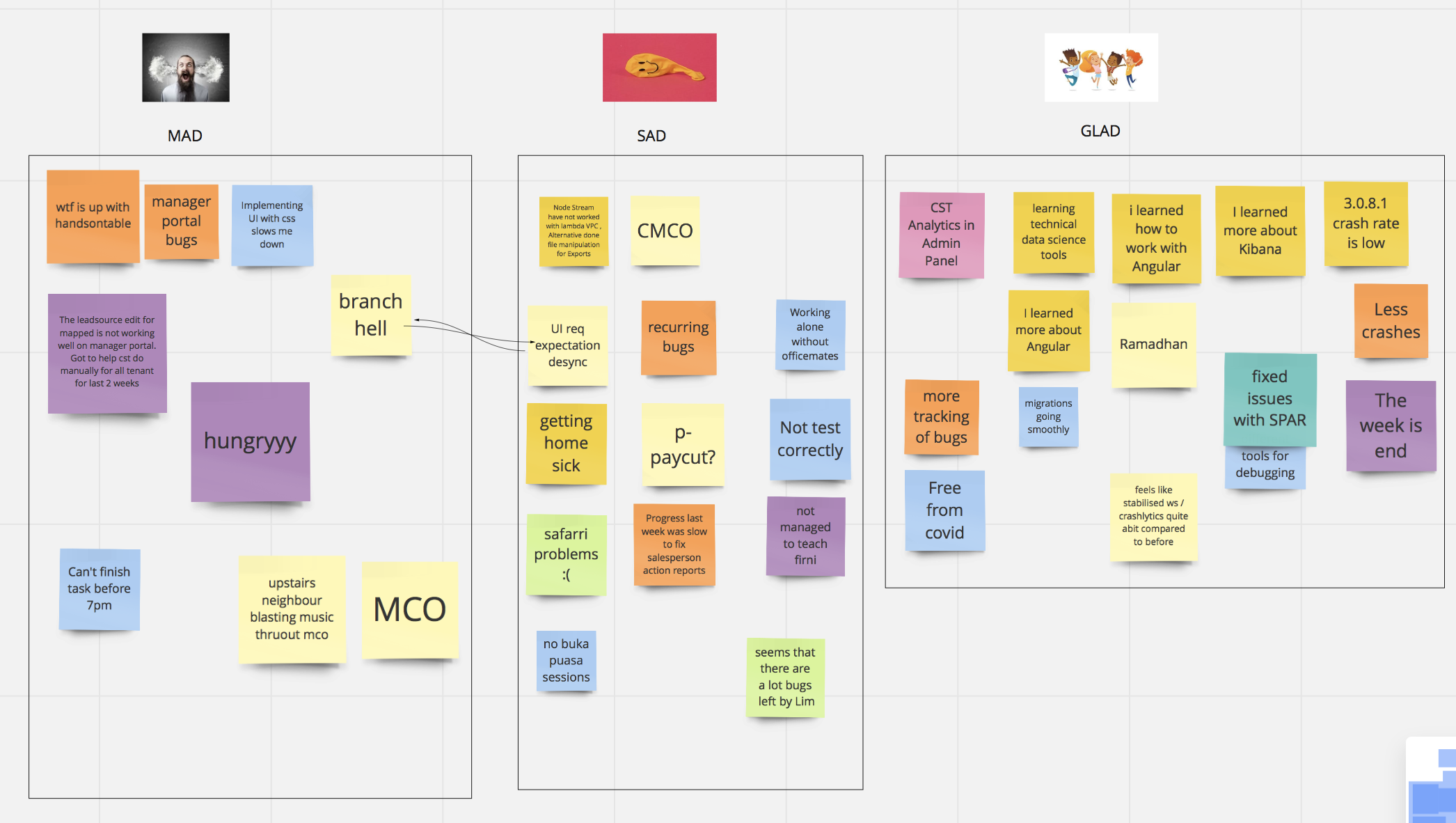
Mad, Sad, Glad
Three columns gave the team room to record frustrations, disappointments, and wins from the same period.
-
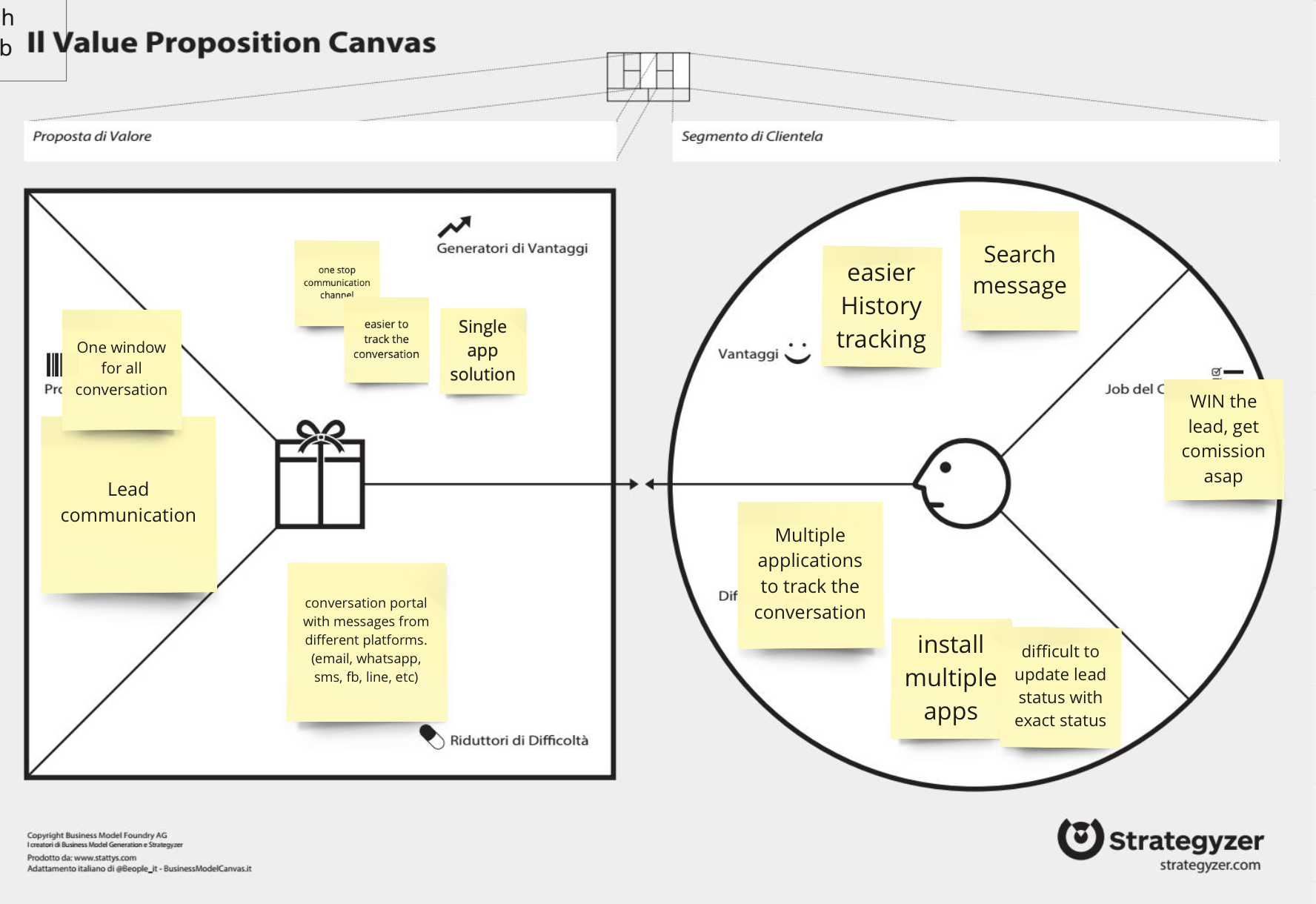
Value Proposition Canvas
The team matched product ideas against customer jobs, pains, and gains.
-
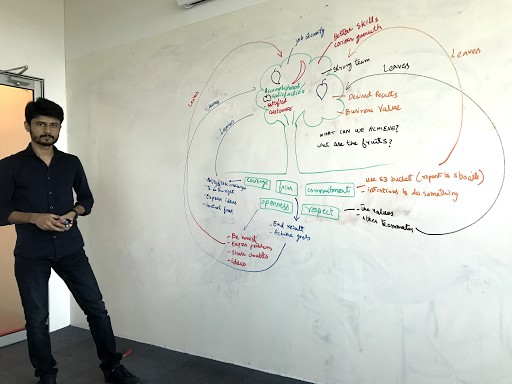
Undated archive photograph Scrum values tree
A whiteboard tree connects the team’s Scrum values to the results it wanted to grow.
During onboarding, new teammates could share how they preferred to work. Explore the Personal User Manual.
Give the next sprint something to try
An archived SalesCandy deck starts with three questions. What should we keep doing? What should we stop? What should we start? It asks teams to examine how people work together, how work gets done, and which tools help or get in the way. The goal is to agree on a change the team can try during the next sprint. Archive source: Retrospectives for All, slides 3–4.
Take the retrospective beyond engineering
The deck compares Scrum with the Entrepreneurial Operating System (EOS), a framework for running a company. It maps the stages of a retrospective onto a weekly EOS Level 10 meeting. Checking in sets the stage. Reviewing the scorecard and quarterly priorities gathers evidence. Discussing and solving issues helps the group decide what to change. The meeting ends by recording actions and rating how it went. Archive source: Retrospectives for All, slides 5–7.
Decide what to keep and what to change
The deck uses Shu Ha Ri to ask how people learn a way of working. Shu means practising the basics long enough to understand their purpose. Ha means adapting a practice once you can see where it helps and where it gets in the way. Ri means developing approaches of your own that still serve the original purpose. The closing slide asks participants to apply that lens to company strategy, structure, processes, and people. It records the exercise the deck proposed. Reza’s later account describes what the software team actually did, including the working agreement that came out of an early retrospective. Archive source: Retrospectives for All, slides 8–13. Read Reza’s sprint reflection in Team management.