 SalesCandy Archive
Vision and innovation
SalesCandy aimed to connect a new lead to an available salesperson within five minutes, giving the team a chance to respond while the prospect was still interested. The product had to work across the websites and landing pages where those enquiries already came in. Reza was also designing for the people who would build and run it.
Start where the enquiry arrives
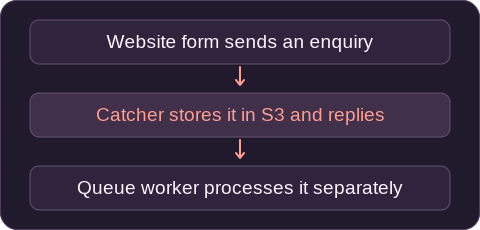
Make lead offers happen in real time
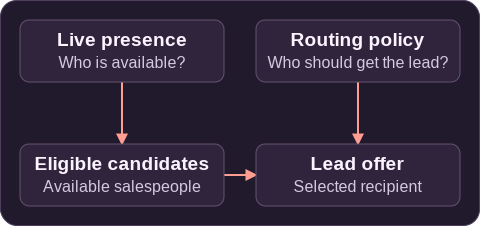
An early Presence revision added Lambda handlers for opening and closing WebSocket connections and sending messages. Reza recalls drawing on his earlier work with PubNub, Flash Communication Server, and IRC.
Test what fair routing looks like

Give two available salespeople different weights, then watch how often each gets the next offer. Reza recalls wanting managers to be able to make this comparison in Manager Portal before choosing a strategy. Try the live routing simulator.
Show managers what happened next
Open a reconstructed day in Manager Portal and follow the colour bands for an individual salesperson. Then compare those bands with the availability totals and first-action time in Salesperson Action.
Design the developer experience
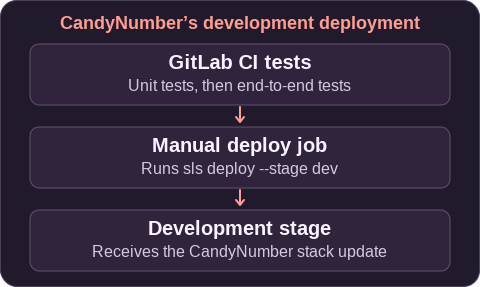
Ele’s change added a job a developer could trigger from GitLab. The pipeline ran checks and Serverless Framework targeted a named development environment. Once changes were ready to share, the team had a place to record them for colleagues. See what the team posted in the Week 21 release notes.
Reza describes the intent as shifting left by default. Developers could get feedback while a change was still in progress and take responsibility for deploying their service. He recalls using the tools and support the team had available, including GitLab, AWS startup support, managed AWS services, AWS SaaS guidance, and the AWS Well-Architected Framework. See the deployment diagram and startup advice in the AWS Activate deck.
See what the pipeline checked
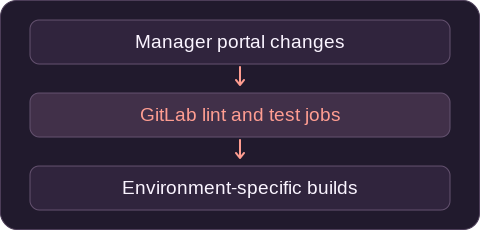
- Linting and automated tests. Manager Portal ran lint and unit-test jobs in GitLab CI. CandyNumber’s pipeline shows a separate end-to-end test stage. See the CandyNumber pipeline.
- Static analysis. Project CPX Report added a SonarQube job and configuration in
d63cc99. Reza identifies the edition as SonarQube Community. See the Project CPX Report history. - Dependency vulnerability checks. Admin Portal’s GitLab CI added both
npm auditand Sonatype-backed AuditJS in49db7e8. The AuditJS job checked merge requests against OSS Index and kept a report for review. The SMS/voice servicesc-twilioadded Snyk testing in3594780. Sonatype’s description of AuditJS and OSS Index.
The checks gave developers something to act on. In Manager Portal, e37c23deb records a Papa Parse upgrade to fix a known vulnerability. Renovate also proposed package updates across repositories. See the Renovate evidence.